A car door slams and your heart jumps. Later that night, you can’t sleep, and the next morning, getting out of bed feels like lifting a wardrobe. That mix is what PTSD and depression can look like when they land together. It’s common. It’s also treatable, which people often don’t hear enough. Here we’ll go through the symptoms, the causes, and the treatment options, plainly and without the jargon. Nobody needs to read it all in one sitting.
Why PTSD and Depression Show Up Together
Trauma wrecks your sense of safety. When that goes, mood often follows. Sleep suffers, concentration slips, and you’ve got no energy for anything. A lot of people also start blaming themselves for how they feel, which makes it all heavier.
Sometimes the low mood goes somewhere darker. If that sounds familiar, read up on psychotic depression symptoms so you know what to watch for.
What the Symptoms Look Like
Everyone’s a bit different. These are the ones people mention most.
- Flashbacks or nightmares that feel real
- Avoiding anywhere that reminds you of what happened
- Feeling flat, empty, or just very sad
- Losing interest in stuff you used to enjoy
- Being jumpy and short-tempered
- Eating or sleeping far more or less than usual
Relationships take a knock too. You go quiet, snap at people, or stop answering messages. ADHD and relationships cover a similar kind of strain.
Symptoms also get mistaken for other things. Autism symptoms in women are a good example, since they often slip by unnoticed.
Where It All Comes From
Rarely just one thing. Usually a few pile up over time.
- A frightening event, like an accident, assault, or sudden loss
- Childhood experiences that were never dealt with
- Depression or anxiety running in the family
- Years of stress with nobody to lean on
- Hormonal changes that mess with mood
Childhood matters more than most people expect. Reading about how therapy for childhood trauma works can explain why old hurts stick around. And if it’s your kid who’s struggling, a child psychologist is a sensible first call.
Treatment for PTSD and Depression: What to Expect
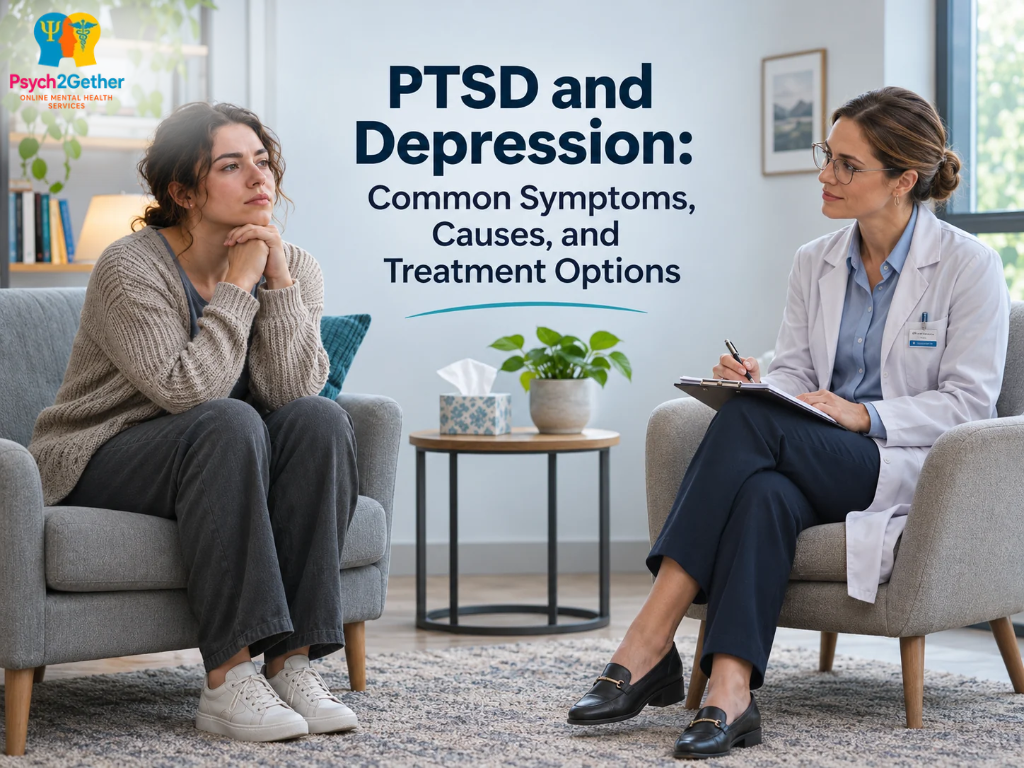
Most people end up with a mix of things. Common ones include:
- Trauma-focused CBT or EMDR
- Medication, if a psychiatrist thinks it’ll help
- Support groups with people who get it
- Small routine changes, like regular walks
Therapy can sound daunting. If you get stuck in loops of repeating thoughts, CBT for OCD shows how this kind of work plays out.
Fit matters, too. Some therapists suit you, and some don’t. This piece on finding the best mental health therapist might save you a few false starts.
At Psych2Gether, consultants run everything online, so you can do it from your sofa. Recovery is slow, but it does happen.
Getting Through the Everyday Stuff
Habits won’t cure PTSD and depression. They do take the edge off, though.
- Go to bed and wake up at roughly the same time
- Walk for ten minutes, even slowly
- Text one person you trust
- Go easy on alcohol and coffee
- Write down what triggers bad days
Wild swings between highs and lows need a professional. Psychotic bipolar depression symptoms explain why.
If you’re thinking about hurting yourself, call 999 or Samaritans on 116 123 now. Please don’t wait.
Start Small Today
Living with PTSD and depression is hard, and nobody gets through it perfectly. Some days will be better than others, and that’s okay. Healing isn’t a straight line. What matters is asking for help before things pile up. You don’t have to carry this alone. When you’re ready, Psych2Gether offers a free 15-minute online consultation with specialists who actually listen. Book it, even if you’re nervous. One small step really can open up better days.
To seek help or professional expertise connect with us at Psych2gether
To understand more, visit us at psych2gether, Atterbury Lakes, Fairbourne Drive, Milton Keynes MK10 9RG