OCD can wear you down. A thought pops up, and suddenly you’re stuck in a loop of checking, counting, or washing. It’s draining. Anxiety often tags along too, and many social anxiety disorder treatments rely on similar therapy skills. The good news? CBT for OCD really works. This guide covers how it helps, which techniques therapists use, and what to expect along the way.
How CBT for OCD Works
OCD follows a pattern. An unwanted thought sparks fear. You do a ritual to feel better. Relief comes, but only briefly, and the thought returns.
Therapy interrupts that pattern. You learn to notice a thought without reacting to it. Slowly, the urge to perform rituals loses its grip.
OCD rarely travels alone. Past trauma can matter a lot too. These signs and symptoms of PTSD in women show how differently trauma can look.
Signs It May Be Time to Get Help
Consider reaching out if:
- Rituals eat up an hour or more each day
- Intrusive thoughts make you feel guilty or scared
- You avoid people, places, or work to stay “safe”
- Relationships or sleep are starting to suffer
Any one of these is reason enough to talk to someone. Mood swings alongside these? A bipolar symptoms test online is a handy first check.
Key Benefits of CBT for OCD
Most people notice:
- Fewer hours lost to rituals
- More confidence with anxious thoughts
- Skills that last for life
- A lower chance of relapse
- A good partnership with medication
Change takes time, but many people feel real improvement within a few months. Families can help a lot too. If your child is struggling, here’s how therapy for children helps.
Common Techniques Used in Sessions
Your therapist will mix and match, depending on you. Common options include:
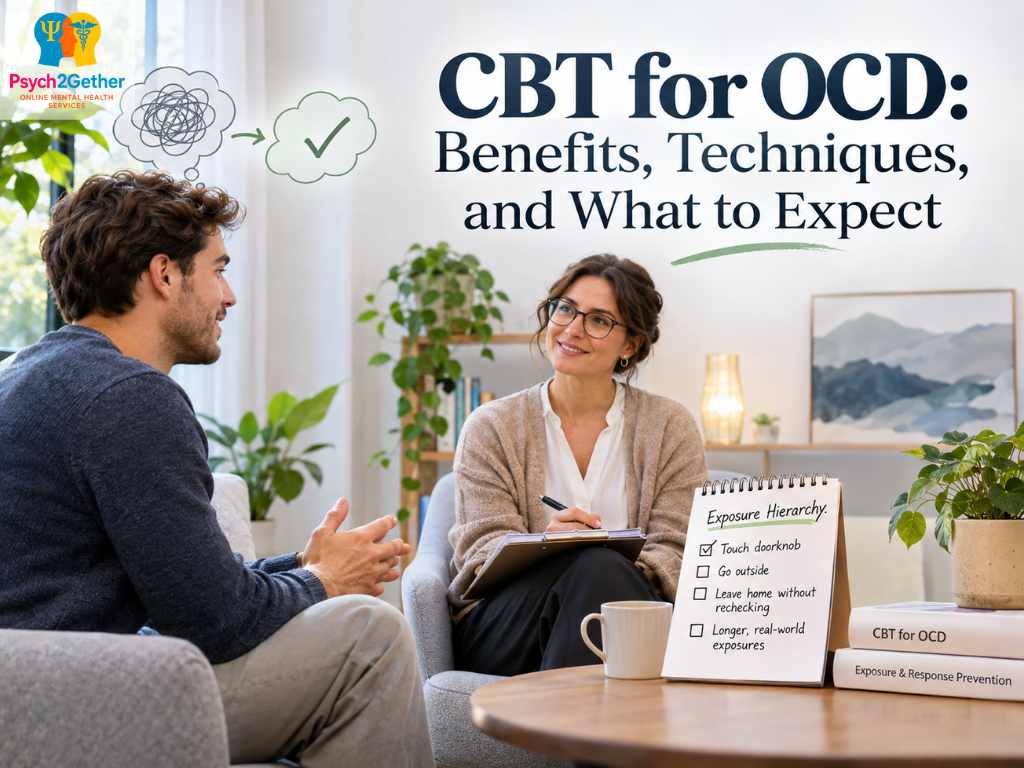
- Exposure and response prevention (ERP): You face fears gradually and skip the ritual.
- Cognitive restructuring: You challenge beliefs about risk and blame.
- Mindfulness: You let thoughts pass without judging them.
- Behavioural experiments: You test whether feared outcomes really happen.
- Homework: You practise between sessions to lock in progress.
ERP sounds scary, but it’s gradual and you set the pace. Exposure ideas also appear in trauma therapy for emotional healing, so the approach is well tested.
What to Expect From Your Sessions
Your first session is mostly a chat. They ask about symptoms, history, and goals. Sometimes traits overlap, and high-functioning autism symptoms can look a bit like OCD habits. A careful assessment sorts it out.
Studies show CBT for OCD works best with a trained therapist. Most courses run 12 to 20 weekly sessions of about an hour. You’ll set goals, build a fear ladder, and practise new habits. Progress isn’t a straight line. Setbacks are normal.
Finding the right fit matters. Look for experience, proper registration, and a warm manner. Our tips to find the best psychologist near me are a good place to start. At Psych2Gether, senior consultants lead every assessment online, so you can begin from home.
Tips to Get the Most From Therapy
A few small habits go a long way:
- Practise between sessions, even for ten minutes
- Be honest about your hardest thoughts
- Skip the constant reassurance-seeking
- Celebrate small wins
- Mention restlessness or poor focus, since an ADHD specialist can check for it
Be patient with yourself. Anxiety often rises before it falls. That spike means the work is happening, not that you’re failing.
Taking the First Step
Recovery is possible, and CBT for OCD gives you real, practical tools. If you suspect there’s more going on, a private autism and ADHD assessment can help. Psych2Gether also offers specialist OCD support online. Book a free 15-minute consultation today and take that first step.a friendly chat, with no pressure.
To seek help or professional expertise connect with us at Psych2gether
To understand more, visit us at psych2gether, Atterbury Lakes, Fairbourne Drive, Milton Keynes MK10 9RG