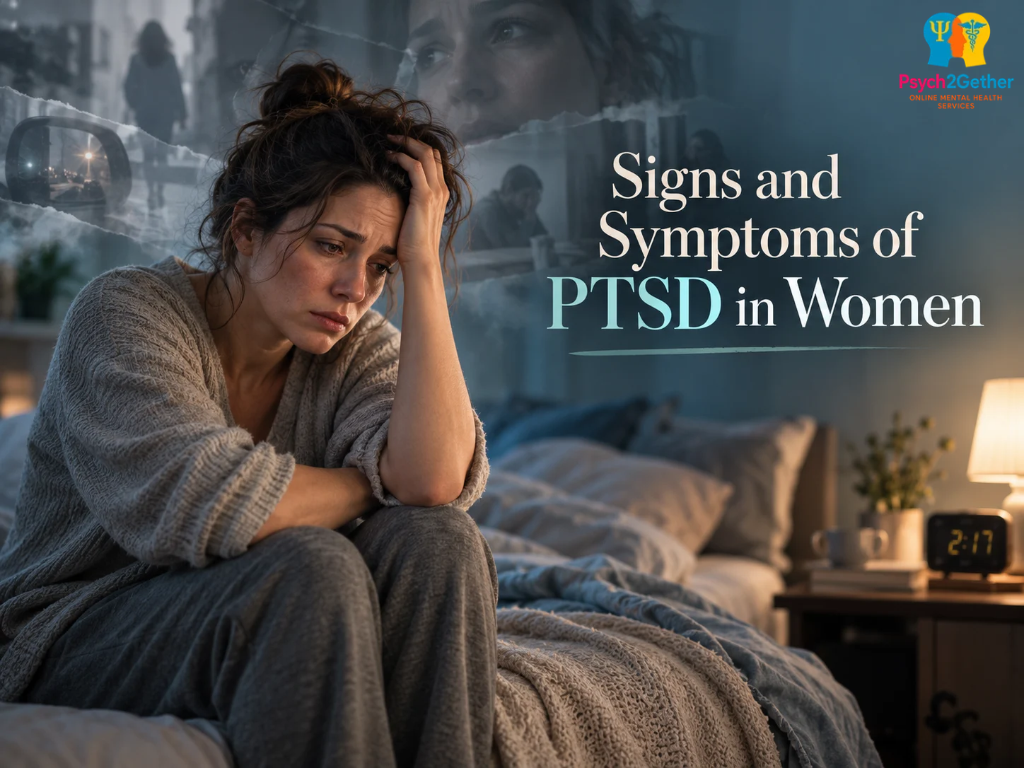
Women’s emotions, sleep, and relationships with others may be altered after a trauma. It’s been in the lives of many women for years without them even knowing what it is called. The first step to getting help is to know the symptoms of PTSD in women. The purpose of this guide is to give, in simple terms, the common signs.
It is possible to develop a post-traumatic stress disorder (PTSD) after an assault, an accident, abuse, a difficult birth, and sudden loss. It’s more common in women than men.
Common Symptoms of PTSD in Women
There are normally four categories of symptoms of PTSD. Some or all of the following may be noticed.
- Repeating the trauma through flashbacks, nightmares, and intrusive memories.
- Avoidance: Avoidance of places, people, or speech that remind one of it.
- Low mood: guilt, shame, numbness, or feeling cut off from loved ones.
- On edge: difficulty sleeping, getting angry, becoming jumpy, and losing concentration.
Typically, symptoms start within weeks. Sometimes they occur months or even years later.
How Symptoms of PTSD in Women Can Look Different
The trauma of a woman may be expressed in other, more subtle ways. Many people turn inward and do not talk about their pain.
- Excessive worry, fear, or social anxiety.
- Fatigue, abdominal pain, and headaches.
- Separating from friends and family.
- Rapid mood changes – sometimes resembling bipolar disorder.
- Denial and/or avoidance of feelings.
This is frequently the result of trauma due to abuse or domestic violence. PTSD can also be caused by childbirth and medical trauma.
Why PTSD Is Often Missed
Diagnosis may be delayed as symptoms of ptsd can be similar to other conditions, especially in women.
Sometimes, the problem lies in a lack of focus and can be confused with ADHD. If a specialist trained in ADHD is paying attention, he or she will be able to determine the true cause.
Social withdrawal may be confused with autism. High-functioning autism might not seem as apparent in women.
When to Seek Help for Symptoms of PTSD in Women
See a professional if symptoms last longer than a month. Talk to them sooner when they start to interfere with your work, sleep, or relationships.
However, if you too are worried about autism, here is what you can expect from an adult autism diagnosis.
Do not try to injure yourself if you feel you need help; seek it immediately. Call your GP, NHS 111, or Samaritans on 116 123.
Treatment Options That Work
PTSD is treatable. With the proper support, many women will recover.
Trauma-focused therapy is the main treatment. CBT and EMDR that focus on trauma are options. Each type of trauma therapy is described in our guide on emotional healing.
Some women can also benefit from medication. Medications for depression can help relieve depression and sleep disturbances. It is advisable to consult a psychiatrist on this.
It’s much more convenient to reach support online. Psych2Gether provides confidential care online throughout the UK. Support in person is demonstrated through a guide to a mental health clinic in London.
Simple Ways to Cope Day to Day
Little behaviours can help relieve symptoms between sessions.
- Establish a regular sleep schedule
- Exercise using a stroll or light activity; get your body moving
- Learn to breathe slowly during a panic
- Limit alcohol or caffeine
- Speak with a trusted individual
- Record your triggers to give to your therapist
How to Support Someone You Love
When a loved one or partner suffers from PTSD, the most important thing is Patience.
- Listen non-judgmentally.
- Do not force her to speak if she does not wish to.
- Understand and honor her triggers.
- Make offers of assistance such as making appointments, including private autism and ADHD evaluations.
You Are Not Alone
To identify the symptoms of PTSD in women can alter a life. Flashbacks, avoidance, low mood, and constant tension should be discussed. There’s nothing wrong with this. It’s the normal response to an abnormal event. Healing is possible. If you recognize these symptoms, talk to a trusted professional or request a complimentary 15-minute appointment with Psych2Gether today. It takes courage to reach out.
To seek help or professional expertise connect with us at Psych2gether
To understand more, visit us at psych2gether, Atterbury Lakes, Fairbourne Drive, Milton Keynes MK10 9RG