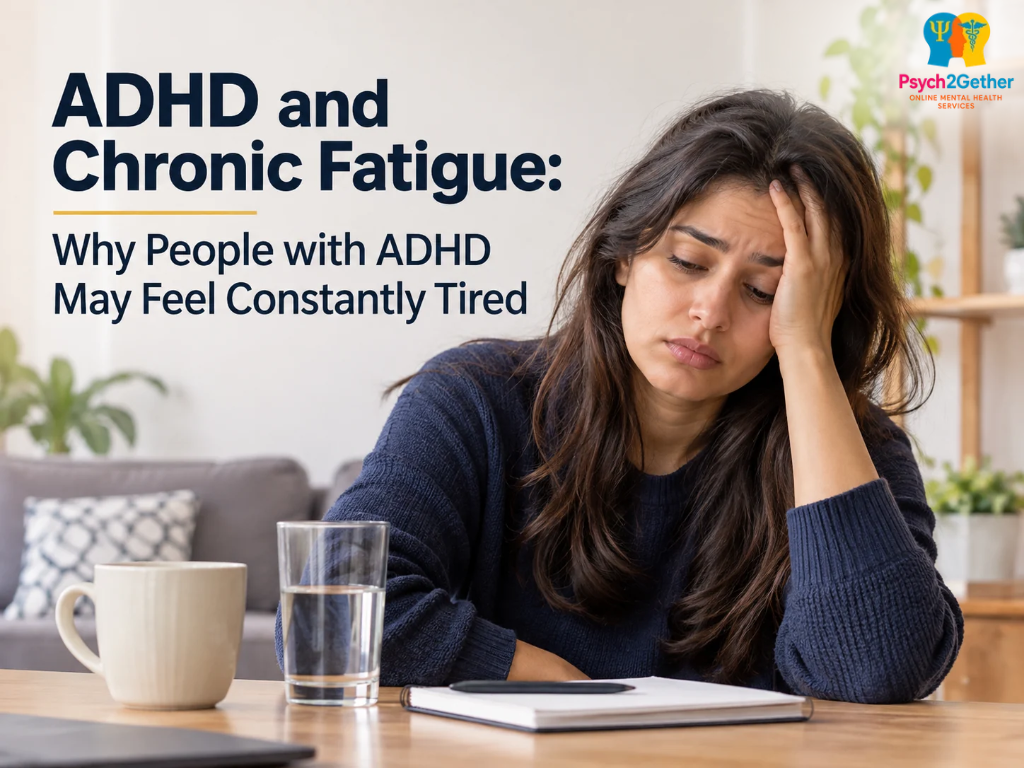
After 8 hours of sleep, you still feel exhausted. By the afternoon, you’re at low tide. Sound familiar? It is a more frequent occurrence than is widely understood. There are lots of grown-ups out there who experience these complications and place the blame on themselves. However, there is a strong connection between ADHD and chronic fatigue, and it’s not a failing at all. Your brain is just working overtime, all day long. Let’s take a look at why that is, what else may be going on, and what works.
Why ADHD and Chronic Fatigue Show Up Together
Being tired isn’t always about sleep. In most cases, it’s all about how hard your day is. Research indicates that individuals with ADHD experience more fatigue than non-ADHD individuals. That’s not laziness. Rarely does this brain get to coast.
This is something that a lot of folks don’t discover until adulthood. The article ADHD and Relationships by Psych2Gether illustrates the extent to which ADHD permeates daily life and that having to always be tired is a part of it.
Why Your Busy Brain Burns So Much Energy
Consider the brain’s activities before lunch. Drives you to concentrate, organize, and follow through, sometimes with little assistance. Little effort goes a long way.
The thing that you miss most is:
- Alternating various tasks throughout the day.
- Forcing yourself to do tedious but essential work
- Managing major emotions continuously
- Denying the illness to yourself and others
Feelings also come into play. People with ADHD have a lot of feelings to deal with, and it’s tiring. This may be worse in midlife women, as we discuss in our blog on ADHD and menopause.
How Bad Sleep Feeds ADHD and Chronic Fatigue
One major piece of the puzzle is sleep. When you’re sleeping, your mind finally settles down to run. You’re up late and awake when you’re groggy.
Some common sleep problems are:
- Difficulty falling asleep or staying asleep at night, and/or waking up tired and irritable in the morning
- Restless Legs or frequent awakening.
- I’ll be honest, I spent a long time scrolling late into the night.
- Undiagnosed sleep apnoea
Bad sleep makes focus difficult; thus, the next day will cost even more energy. It turns into a vicious cycle that is difficult to overcome.
Other Causes Worth Looking Into
In some cases, ADHD and chronic tiredness can overlap with other conditions, making it difficult to determine what’s actually happening. Sadness, worry, and painful experiences can all exhaust you.
Childhood stress can maintain that “high alert” state for years. We wrote about the process of healing in our post on how therapy for childhood trauma works. Your energy can also change when you have a change in mood. For more information read about what are the symptoms of psychotic depression and what are the symptoms of psychotic bipolar depression.
Another that is missed is autism, particularly in females.
Small Ways to Protect Your Energy
While there isn’t a quick magic cure for ADHD and chronic fatigue, small habits do make a difference. Choose 1 or 2 to start.
- Follow a regular sleep pattern.
- Use small steps to complete large tasks
- Don’t push through until you crash; push through before you go over the edge.
- Take a 10-minute walk or stretch break!
- Please take regular meals and drink water.
- Cut back on caffeine after lunch
Pacing and coping skills can also be learned through therapy. CBT can be of assistance when it comes to racing thoughts. When looking for help, begin with the best mental health therapist near me. A child psychologist near me may also come in handy for parents.
Final Thoughts
Being tired all the time doesn’t mean you’re weak or lazy. ADHD and chronic fatigue often go hand in hand, and knowing why is the first step towards feeling better. Be gentle with yourself right now. Rest is something you’re fully allowed to have. If exhaustion keeps affecting your work, mood or relationships, talk to a professional. At Psych2Gether, our team offers friendly online ADHD assessments and ongoing support, so you don’t have to figure this out alone.
To seek help or professional expertise connect with us at Psych2gether
To understand more, visit us at psych2gether, Atterbury Lakes, Fairbourne Drive, Milton Keynes MK10 9RG