Ever flinched when someone raised their voice, even though nothing was wrong? Or felt oddly guilty for no reason? Old hurts can hang around for decades. Therapy for childhood trauma helps you understand why and slowly loosen their grip. So what actually happens in the room?
What Trauma Does to a Kid
Trauma isn’t only the big, obvious stuff. Yes, it covers abuse and violence. But it also covers a parent leaving, a long hospital stay, or years of being picked on at school.
A child can’t process that kind of fear. So the brain just learns to stay alert. Grown up, you might still be scanning every room. You might also find trust hard, or feel flat and tired. Some women show it differently, and signs and symptoms of PTSD in women cover that well.
Why Therapy for Childhood Trauma Is Worth It
Waiting it out rarely works. The body keeps score, even when you’ve stopped thinking about it. Left alone, old fear leaks into new relationships and jobs. Therapy gives that fear somewhere to go.
There’s another catch. Trauma can look like something else entirely. Poor focus, say, or social awkwardness. Reading about high-functioning autism symptoms or talking to an ADHD specialist can show how much the signs overlap. A good clinician will untangle it for you.
How Therapy for Childhood Trauma Starts
Don’t expect to relive everything in week one. The early sessions are slow on purpose. Your therapist wants you to feel safe first. Usually that means:
- Getting to know each other
- Learning a few grounding tricks for when panic hits
- Agreeing on what you want out of this
- Finding out why your body reacts the way it does
Fit matters a lot. If you’re unsure where to begin, this piece on how to find the best psychologist near me might help.
Methods Your Therapist Might Use
There’s no single fix. A therapist picks what suits you. You might hear about:
- Trauma-focused CBT, which works on painful thought loops
- EMDR, for reprocessing stuck memories
- Play therapy, mostly for little ones
- Family sessions, so home feels more supportive
Trauma therapy for emotional healing goes deeper on each one. And if a child is the one struggling, how therapy for children helps is worth a read.
Anxiety and mood swings often tag along too. Some people look at social anxiety disorder treatments. Others try a bipolar symptoms test online just to put a name to things. Neither replaces a proper assessment, but both can nudge you in the right direction.
Inside a Session
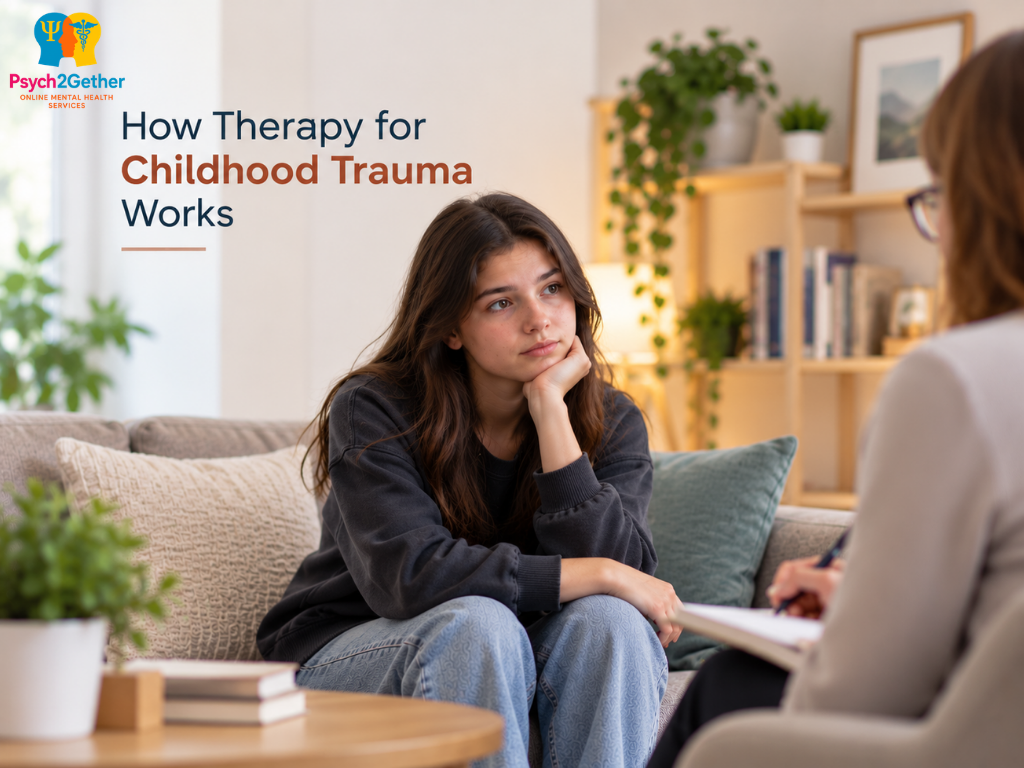
Most last around 50 minutes, in person or online. You talk. You pause. You breathe when you need to. Sometimes you leave with a small task to try before next time. You can slow down whenever you like. Don’t be shocked if you’re exhausted afterwards. That’s your mind working hard, so go easy on yourself.
Signs It’s Working
Progress is messy. Some weeks you’ll feel lighter. Others will knock you flat. Over time, though, people often report:
- Fewer nightmares and flashbacks
- Sleeping better
- Less snapping over small things
- Closer, easier relationships
Got attention or autism questions on top of all this? A private autism and ADHD assessment near me can happen alongside therapy. Psych2Gether runs consultant-led care online across the UK.
Final thoughts: Is Therapy for Childhood Trauma for You?
Still thinking about things that happened years ago? That’s your cue. You don’t need a crisis to ask for help. Therapy for childhood trauma tends to work best when you’re ready, and a good therapist won’t push you faster than you can go. Try a free 15-minute consultation with Psych2Gether. Worst case, you’ve had one honest chat with someone who listens.
To seek help or professional expertise connect with us at Psych2gether
To understand more, visit us at psych2gether, Atterbury Lakes, Fairbourne Drive, Milton Keynes MK10 9RG