
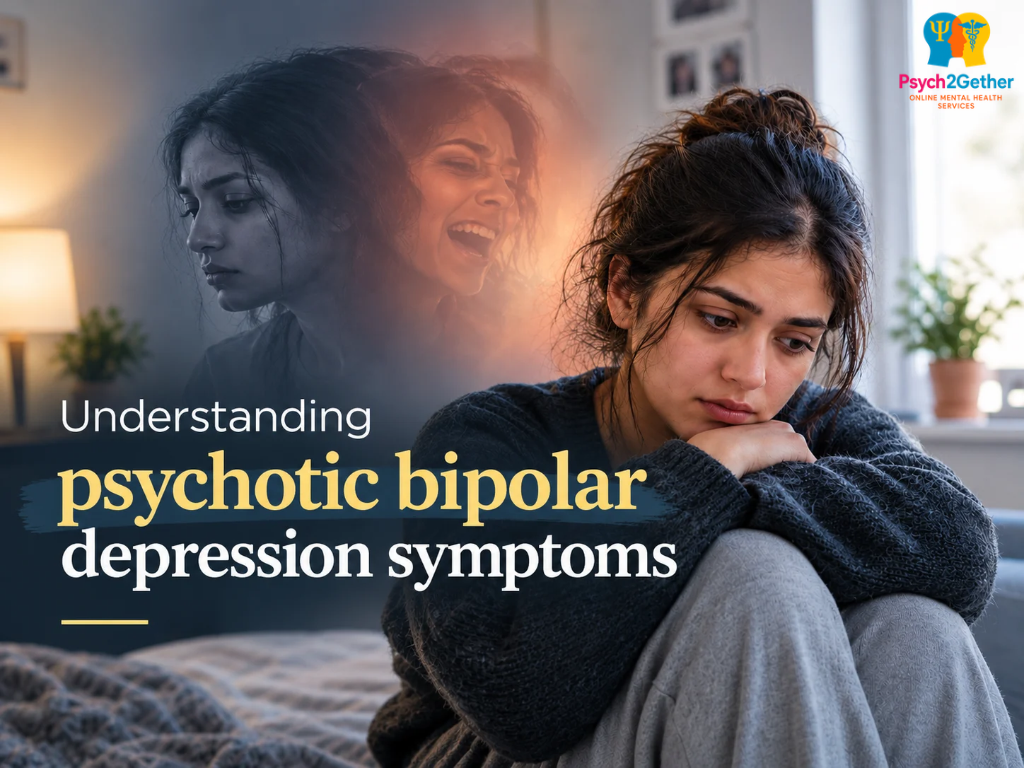
Bipolar disorder often gets described as mood swings. Ups and downs. That’s a thin way to put it, and it skips the scariest part for some people: psychosis during a low. If you’re reading about psychotic bipolar depression symptoms, I’m guessing something’s worrying you. Let’s go through it slowly.
What are psychotic bipolar depression symptoms?
Short version: it’s a depressive episode of bipolar disorder where the person also loses touch with reality. Not every low does this. Some do.
Nobody chooses it, and it’s nothing to be embarrassed about. People get better. At Psych2Gether, we’d honestly rather hear from you early than late.
What the low feels like
Imagine two weeks of bad sleep, no appetite, and a phone you can’t bring yourself to answer. Sound familiar? It might look like this:
- Sadness that just sits there
- Being wiped out, whatever you do
- Sleeping loads, or barely at all
- Dropping friends and hobbies
- Finding it hard to pick what to eat
- Guilt over things that aren’t your fault
None of this means you’re just being lazy. The illness is doing it, not you.
And then the psychosis
This part catches families off guard. Someone hears a voice putting them down. Or they become completely sure they’ve wrecked everything for everyone. You might also see:
- Seeing things that aren’t there
- Worry that neighbours or colleagues are watching
- Speech that wanders or doesn’t quite make sense
- Sudden distrust of people they love
Because the person is low, the beliefs lean dark. Catching psychotic bipolar depression symptoms here can mean getting care weeks sooner.
Why psychotic bipolar depression symptoms slip through
Honestly, it’s often the person hiding it. They talk about feeling flat. They don’t mention the voices, because who wants to say that out loud? So the diagnosis ends up wrong. Other things get blamed:
- Trauma, since fear and flashbacks can look similar. Have a read of signs and symptoms of PTSD in women
- Social anxiety disorder, when pulling back from people looks like plain shyness
- ADHD, if the racing thoughts are all anyone notices
- High-functioning autism, where social differences get put down to something else
Still stuck? A private autism and ADHD assessment can sort out what’s what.
Triggers
Doctors don’t have one neat cause. Bipolar disorder running in the family matters. Bad sleep matters. So do heavy drinking, a rough year and stopping your tablets without telling anyone. Stress at work or a bereavement can do it too, sometimes. A scribbled diary helps, honestly. You’ll spot patterns faster than you’d expect. None of it’s your fault.
Where to start
Start small. A bipolar symptoms test online won’t diagnose you, but it gives you words. Then talk to someone. Finding the best psychologist near you is less awkward than it sounds. If old hurts still weigh on you, trauma therapy might help. Worried about someone younger?
Treatment is rarely one thing. It’s medication, therapy and a few dull habits, like going to bed at the same time every night. A psychiatrist looks after the medication, and our team can help you book one.
Supporting someone else?
- Listen first, talk later
- Don’t argue with what they believe
- Stay calm, even when you’re not feeling it
- Keep nudging them toward a doctor
Look after yourself too.
Final thoughts
If you’ve spotted psychotic bipolar depression symptoms in yourself or someone you care about, please don’t sit on it. Speak to your GP soon. If anyone is at risk, call emergency services or reach out to Samaritans, free at any hour. You’ve already taken the hardest step. When you’re ready, Psych2Gether is here to listen and point you to support. Get in touch today…
To seek help or professional expertise connect with us at Psych2gether
To understand more, visit us at psych2gether, Atterbury Lakes, Fairbourne Drive, Milton Keynes MK10 9RG