Maybe your daughter has started crying every Sunday night. Or your son, who once chatted non-stop, now barely says a word at dinner. You notice, you worry, and you wonder what on earth to do next. Therapy for children is one answer, and probably a less scary one than you’d expect.
What Therapy for Children Actually Looks Like
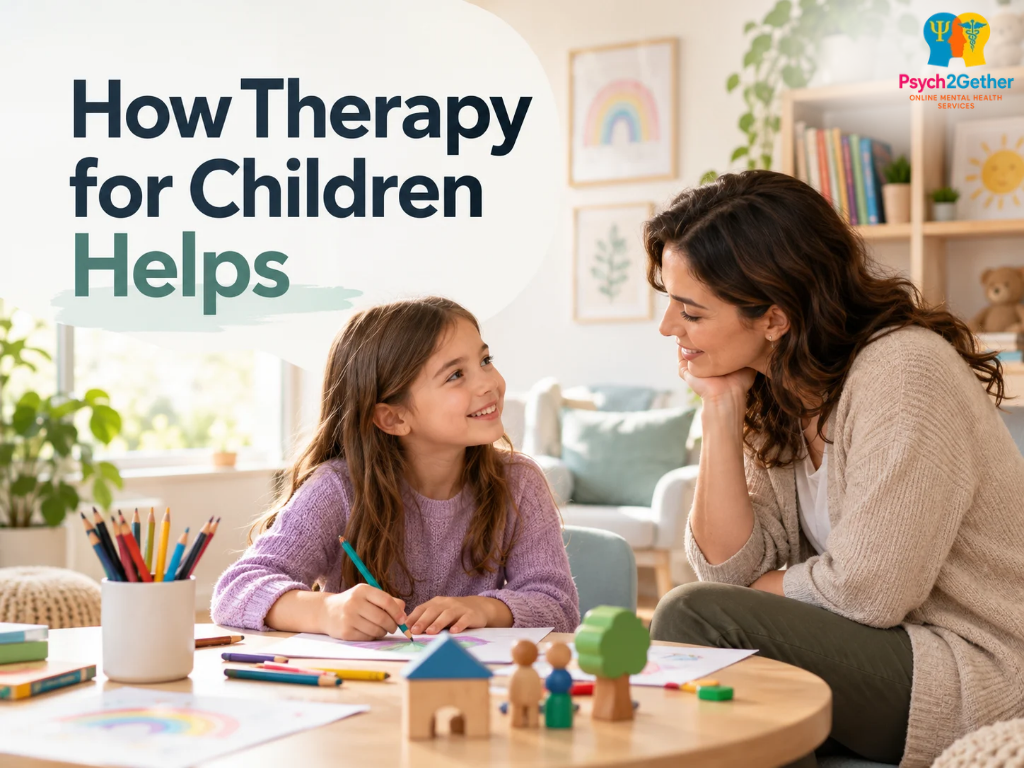
Stop staring at the same picture of a child on a couch. In actual sessions, it usually feels steady and less up and down. A six-year-old might spend a lot of the time drawing or moving tiny toy people from one spot to another. The therapist stays close and offers words as needed. By around fifteen, it is often mostly talking. At that point, it may be enough just to talk.
Nobody is forced to say anything. The therapist reads the room, follows the child’s lead, and builds trust bit by bit.
Signs It Might Be Time to Get Help
Bad moods happen. Growing up is messy. What should make you look closer is when something lasts for weeks, or starts getting in the way of normal life. For example:
- They worry all the time, about everything
- Moods swing with no clear reason
- Sleep has gone wrong (nightmares, wide awake at 2 am)
- They’ve dropped friends or hobbies they loved
- School refusal, or grades suddenly sliding
Our article on high-functioning autism symptoms covers traits that are easy to miss. If your child panics around new people, social anxiety disorder treatments are worth a look as well.
How Therapy for Children Helps in Real Life
Don’t expect miracles in week one. Change creeps in. You might notice that tea-time is calmer, or that a tantrum ends in five minutes instead of fifty. Parents tend to report seeing:
- Fewer blow-ups
- Conversations that actually go somewhere
- A bit more confidence, often at school first
- Friendships that stick
After a Rough Experience
Bullying, a bereavement, a car accident, even a house move can leave a mark. Your child may not say much about it. They might just act differently. Trauma-informed care starts with making them feel safe again, nothing more. Our piece on trauma therapy for emotional healing explains what that involves. It can’t be rushed, and that’s okay.
Why Early Therapy for Children Matters
A small worry is easier to deal with than a big one. Left alone, it tends to grow and spill into school, friendships, and family life.
Sometimes there’s an underlying reason, like ADHD or autism. Getting a proper answer can be a huge relief, for you and for them. Many families begin with a private autism and ADHD assessment. Not sure who to see? This guide on finding an ADHD specialist near me might save you some time.
Our autism assessment London post walks through how diagnosis works. And if you suspect you share some of these traits yourself, adult autism diagnosis is a good place to start.
One more thing for parents of teens. Extreme highs and lows can mean more than hormones. A bipolar symptoms test online gives a first impression, though only a professional can say for sure.
What You Can Do at Home
Therapy for children does more good when home is on board. You don’t need to be perfect. Just try to:
- Listen before you fix
- Keep routines fairly steady
- Praise effort, even when results are poor
- Tell teachers what’s going on
Taking the First Step
Asking for help isn’t failing. If anything, it’s the opposite. At Psych2Gether you can book a free 15-minute consultation, just to talk things over, with no strings attached.
If you’d rather see someone in person, there’s a mental health clinic in London option too. Therapy for children won’t fix everything overnight. But it gives your child words, tools, and a person in their corner, and that’s a solid start. Psych2Gether is here whenever you decide to take it.
To seek help or professional expertise connect with us at Psych2gether
To understand more, visit us at psych2gether, Atterbury Lakes, Fairbourne Drive, Milton Keynes MK10 9RG