You’ve certainly experienced it before! The feeling of being a little bit different, even if you don’t necessarily know why. That feeling has a name for many adults, and for many, an Adult Autism diagnosis is often the first time they finally understand what’s going on. Others can remember it from their youth. Some only begin to ponder it later in life, when they’ve been simply getting by for years.
Signs You Might Need an Adult Autism Diagnosis
Not all adults with autism present in the same manner as an autism textbook would lead you to believe. Many people hide their characteristics so effectively that good friends and family members don’t even know. There are a handful of recurring themes:
- Struggling to pick up on social cues or unspoken rules
- Rather than small talk, preferring straight talk
- A need for routine and to be disoriented when it is disturbed
- Be engrossed in an interest or two in particular
- Excessively sensitive to noises, light, or certain textures
- Simply feeling “off” in social situations, for no known reason
Here’s the tricky part: a few of these overlap with Adult ADHD too. That’s exactly why guessing at home rarely gives you a real answer. You need someone trained to tell the difference.
How the Assessment Actually Works
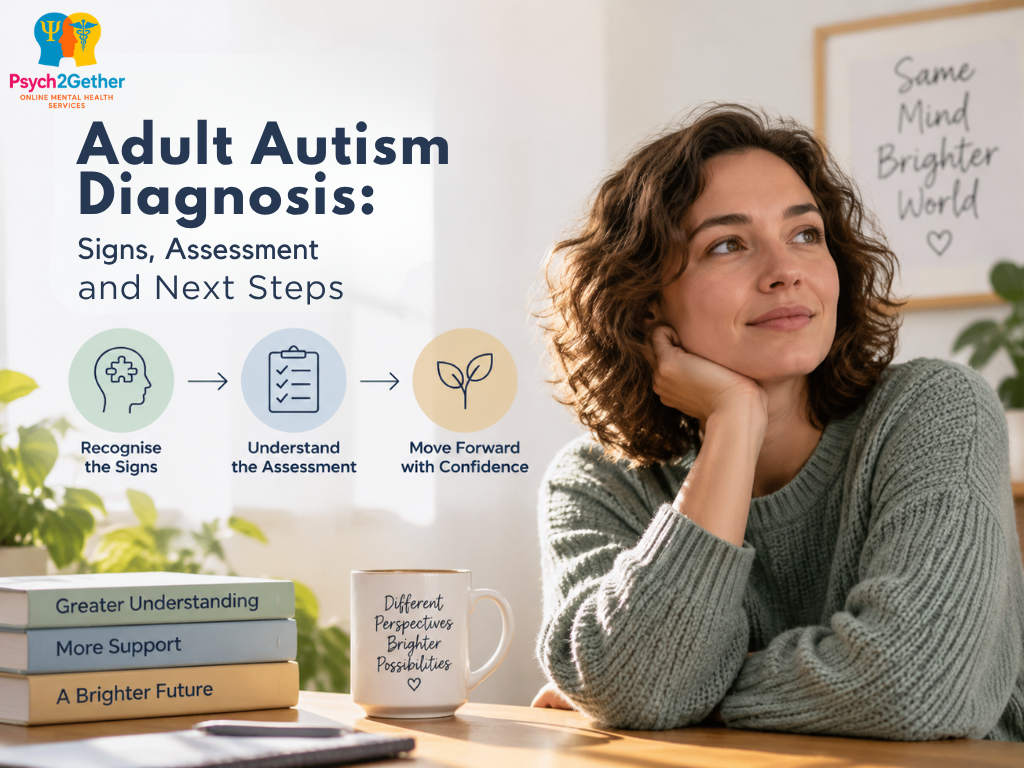
People often imagine an autism assessment as some kind of pass-or-fail test. It’s not. It’s more of a conversation, spread across a few structured steps.
- A questionnaire beforehand, to get a sense of your background
- A proper clinical interview, usually 90 to 120 minutes
- A look back at your developmental and life history
- Observation, where it’s relevant
- A written report at the end, explaining everything clearly
If you want a fuller picture of how ADHD and autism assessments are handled together, this piece on online adult assessments walks through it well. Our own adult autism assessment page also covers what each stage looks like in more detail.
Why Bother Getting a Diagnosis at All
Fair question. It’s not just a label you carry around. For most people, it actually changes how they move through daily life.
- It puts a stop to years of quietly blaming yourself
- It gives you grounds to ask for adjustments at work
- It opens the door to therapy, coaching, and other support
- It can explain why anxiety keeps creeping in alongside it, since the two often go hand in hand
- It can lead to practical help, like occupational therapy, for everyday tasks that feel harder than they should
Honestly, most people say the process felt more like relief than dread once they got through it.
What Happens After You Get Your Adult Autism Diagnosis
The report lands, and then what? A few sensible next moves:
- Sit down with your clinician and actually talk through the findings
- Look into therapy or coaching that fits how you work, not a generic plan
- Ask your employer or school about reasonable adjustments
- Find a community of people who get it, because that matters more than people expect
Money is often the real question mark here, so it’s worth checking fees and payment options early on, since flexible plans are usually available. And if you’re still weighing up where to even start, this guide on finding a private mental health assessment near you is a decent place to look.
The Bottom Line
An Adult Autism Diagnosis isn’t about fixing something broken. It’s about finally getting language for experiences you’ve carried around for years, sometimes decades. If any of this sounds familiar, don’t just sit with the question. Reach out to the team at Psych2Gether and talk it through with someone who can actually help.
To seek help or professional expertise connect with us at Psych2gether
To understand more, visit us at psych2gether, Atterbury Lakes, Fairbourne Drive, Milton Keynes MK10 9RG