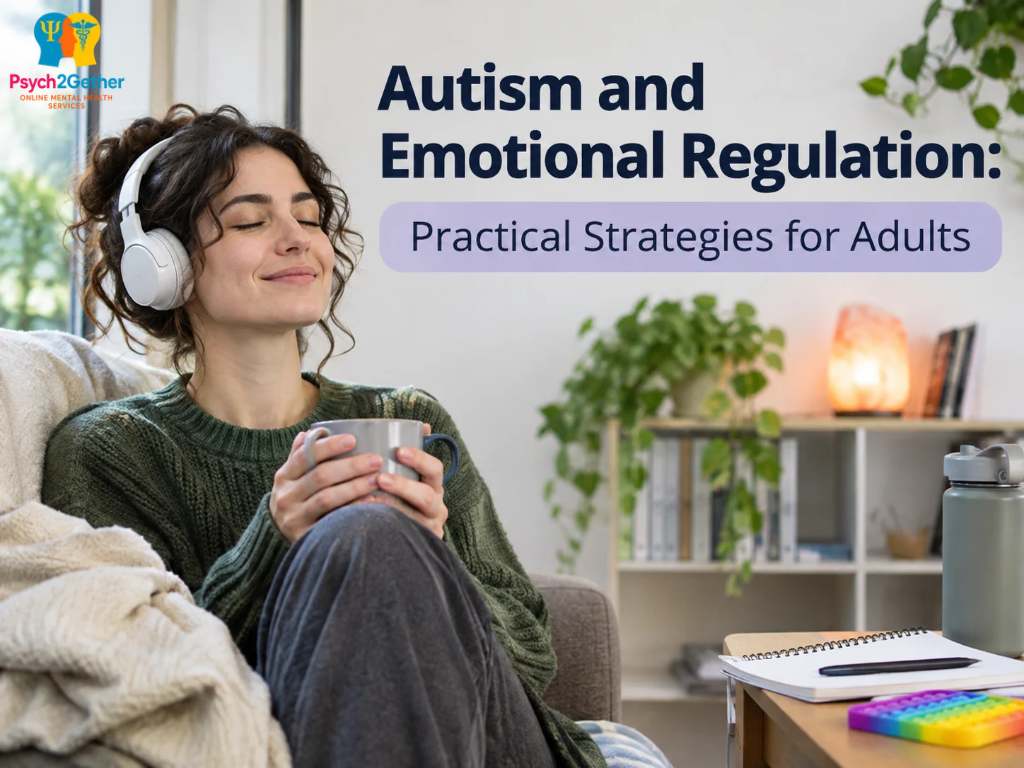
Ever cried in a lift because someone stood too close? Or snapped at a person you love over something tiny? It happens. Autism and emotional regulation are tied up together, and plenty of adults spend years blaming themselves for it. They shouldn’t. This post looks at why feelings can spike so fast, and which small habits tend to help. No two autistic people react in quite the same way. Some will suit you. Some won’t. That’s fine.
Why Autism and Emotional Regulation Don’t Always Get Along
Think of your senses as a bucket under a slow tap. Noise, light, smells, people, small talk, an itchy label. It all drips in. Most days the bucket copes. Then one extra drop and it spills. That spill is a meltdown or a shutdown, and it isn’t a choice.
Lots of people only figure this out in their thirties or later. Reading about high-functioning autism symptoms can feel oddly like being seen. If you also lose focus a lot, an ADHD specialist can help work out which is which.
Working Out What Sets You Off
Some triggers are obvious. Others sneak up on you. These come up a lot:
- Supermarkets on a Saturday
- A meeting moved with no notice
- Pretending you’re fine for eight hours straight
- Skipping lunch, then wondering why you feel awful
- Tags, seams, scratchy jumpers
Try writing down what happened just before a bad moment. You’ll probably see something you’d missed. Anxiety often hides under all this too, so social anxiety disorder treatments might be worth a read.
Everyday Habits for Autism and Emotional Regulation
None of this needs to be perfect. Try one thing for a week and see.
- Say it out loud, even to an empty room. “I’m wound up” does more than you’d think.
- Leave the room before you reply to something heated.
- Score your stress out of ten. Act at a four, not a nine.
- Ask for warnings when plans change.
- Protect quiet time after draining days.
It’s easier to practise these with someone alongside you. If you’re stuck on who to see, this guide to finding the best psychologist near me helps.
Calm the Body, Then the Mind
Telling yourself to calm down rarely works. Going through the body usually works better, and that’s true for autism and emotional regulation too.
- Breathe in for four, out for six
- Weighted blanket or a firm hug
- Headphones on the train
- Rocking, humming, fidget toys
- Ten minutes outside
Stimming gets judged, but it does release tension, so don’t fight it. Past trauma can also make feelings harder to settle. You could read up on the signs and symptoms of PTSD in women or trauma therapy for emotional healing.
When to Reach Out for Help
If meltdowns happen weekly, or you’ve felt low for a few weeks, talk to someone. A proper assessment, like the ones at Psych2Gether, can explain why life feels harder than it should.
Not sure you’re autistic? A private autism and ADHD assessment gets you a straight answer. Mood swings that feel extreme? A bipolar symptoms test online can show whether a closer look is needed. Parents may also like this piece on how therapy for children helps. Support for autism and emotional regulation shouldn’t feel like a fight.
Last Thoughts
Nobody gets this right every day. Some days you’ll sail through a loud room, and on others a dropped fork will floor you. Both are completely normal, and that’s okay. Pick one habit and give it a few weeks. Building skills around autism and emotional regulation is slow work, but slow still counts. If you’d like a hand, Psych2Gether offers a free 15-minute chat, no pressure. Be kind to yourself while you work it out.
To seek help or professional expertise connect with us at Psych2gether
To understand more, visit us at psych2gether, Atterbury Lakes, Fairbourne Drive, Milton Keynes MK10 9RG