
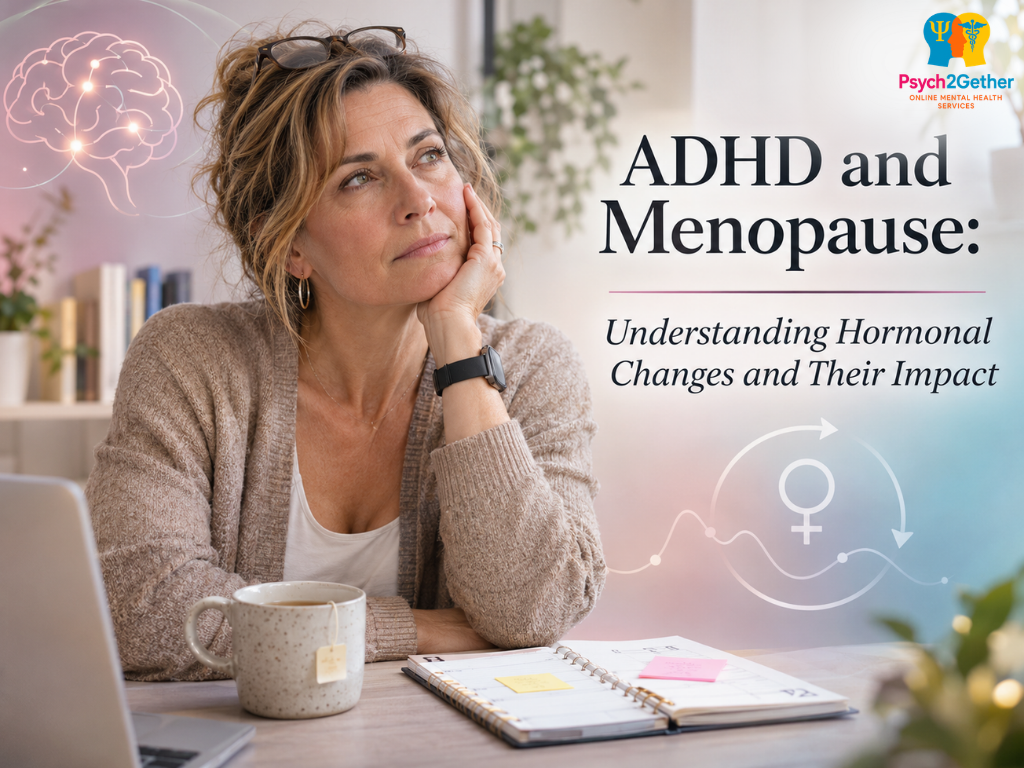
Struggling to focus lately? Forgetting words mid-sentence? You may wonder if it is just age. For many women, ADHD and menopause collide in ways nobody warned them about. Hormones shift, and ADHD symptoms often get louder. This guide explains why, and what you can do about it.
Why ADHD and Menopause Collide
Oestrogen helps your brain make use of dopamine, the chemical behind focus and motivation. In perimenopause, oestrogen doesn’t just fall. It bounces around, sometimes week to week. Your focus bounces with it.
Women who already live with ADHD tend to notice first. The routines they built over decades stop holding. Some are diagnosed only now, at 45 or 50, after years of being told they were simply disorganised. Looking into adult ADHD can finally explain that.
Signs That Overlap Between ADHD and Menopause
Honestly, it’s hard. Both bring:
- Brain fog
- Forgetting appointments and names
- Irritability
- Broken sleep
- Feeling swamped by ordinary jobs
Timing is the best clue. ADHD traits go back to childhood, even if nobody named them. Menopause symptoms turn up later, usually with hot flushes or changes to your periods. A good ADHD assessment in London goes through your whole history, so it can separate the two.
Why So Many Women Slip Through
Boys with ADHD tend to be loud. Girls often just drift off in class. They get labelled shy or dreamy, and they work twice as hard to cover the gaps. By midlife, a lot of them are worn out, and doctors reach for hormones or anxiety as the explanation.
ADHD runs in families, so some mums spot themselves while reading about child ADHD. If that happens, talk to an ADHD specialist near you.
Managing ADHD and Menopause Day to Day
You don’t need a full life overhaul. A few changes usually do more than a perfect plan:
- Set phone alarms for everything, even lunch
- Cut big jobs into ten-minute pieces
- Walk after dinner
- Go to bed at the same time
- Write symptoms down for a month
These practical ADHD coping strategies are a decent starting point.
What About HRT?
HRT can calm menopause symptoms, and a few women say their thinking gets sharper too. Evidence on ADHD itself is thin, though. Medication and therapy are separate options. Ask your GP or psychiatrist before changing anything, and keep taking what you’re prescribed until they say otherwise.
Burnout Is Real Here
Poor sleep plus a busy ADHD brain is a tiring mix. Many women keep going on willpower until one day they simply can’t. Watch for these:
- Dreading things you used to like
- Snapping at family over nothing
- Needing days to recover from small tasks
If you see them, cut something from your week. Ask someone to take over a chore. Recovery is slow, so start early.
Getting Assessed
A psychiatrist will ask about school, work, relationships and health. They’ll also check for anxiety and depression, since those often tag along at this stage. Many people now do this by video, and an online ADHD assessment can happen from your own sofa.
A diagnosis won’t fix everything. But plenty of women describe a kind of relief, because decades of “why can’t I just cope?” finally get an answer.
To seek help or professional expertise connect with us at Psych2gether
To understand more, visit us at psych2gether, Atterbury Lakes, Fairbourne Drive, Milton Keynes MK10 9RG