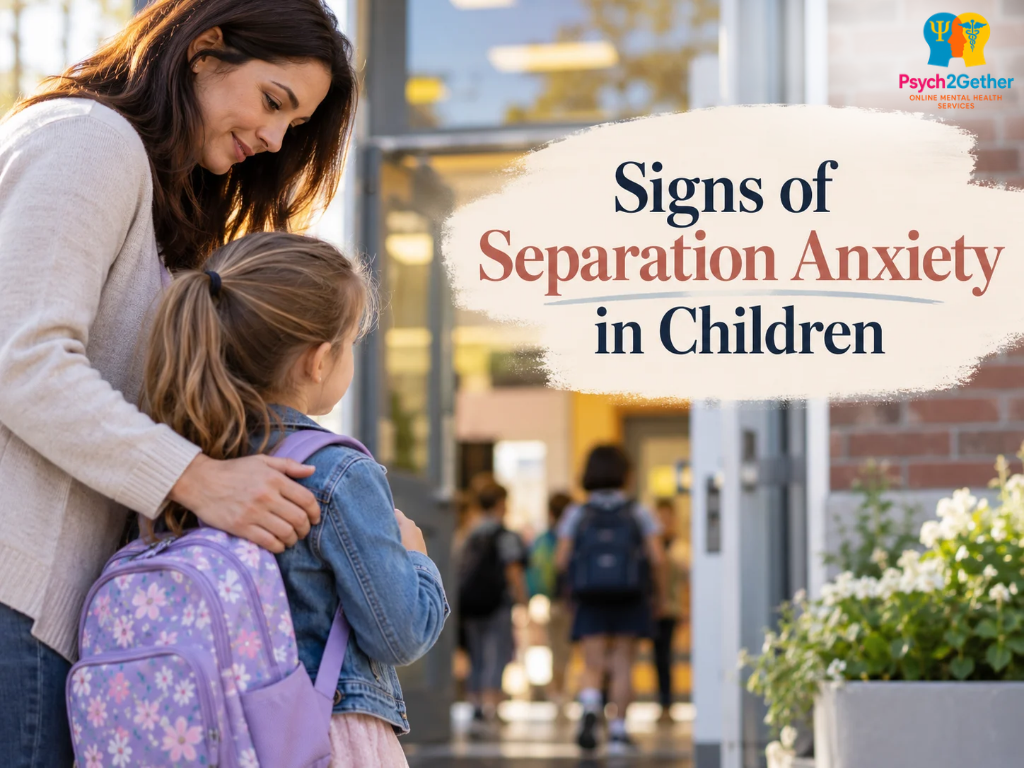
A six-year-old feels sick every Monday morning. His stomach is fine. He just can’t face waving goodbye to Mum. Plenty of parents will recognise that scene. The signs of separation anxiety in children aren’t always loud, and a few hide in plain sight.
What Is Separation Anxiety in Children?
Clinging is normal at first. Babies cry when you leave the room, and toddlers can be dramatic about it. Most grow out of it around three. A new school, a house move, or a baby sister can bring it back for a while, and that’s fine too.
The trouble starts when the fear is huge, hangs around for months, and starts running the household. Your child might be sure something awful will happen to you while they’re apart. Anxiety also shifts as kids get older, and our piece on social anxiety disorder treatments shows how different it can look.
Emotional Signs of Separation Anxiety in Children
Feelings tend to show up first.
- Panic when you head for the door, or even mention going out
- Worry that you’ll be hurt or won’t come back
- Hating to be alone, even upstairs
- Bedtime battles
- Nightmares about losing you
Physical Signs of Separation Anxiety in Children
Little ones often can’t say ‘I’m scared’. So the body does the talking instead.
- Tummy aches and headaches, mostly on school days
- Feeling sick
- A pounding heart or quick breathing
- Shaky hands, sweating, dizziness
- Tired and grumpy after bad nights
Watch the timing. If it all settles once they’re back with you, that’s a strong hint.
What You Might See Them Do
Behaviour is harder to miss than feelings, so it’s often what parents spot first.
- Shadowing you from room to room
- Saying no to playdates and sleepovers
- Ringing you again and again from school
- Meltdowns when plans change
- Going back to baby talk or bedwetting
Refusing school for weeks is a bigger flag. Sometimes it isn’t anxiety alone. Certain high-functioning autism symptoms look very similar on the surface, which is why a full picture matters.
Is Something Else Going On?
A child who hates change might have ADHD or autism rather than anxiety. Getting a private autism and ADHD assessment clears up a lot of guesswork, and an ADHD specialist can point you in the right direction. Some parents see the same patterns in themselves. If that’s you, the adult autism diagnosis guide is a good read. Based near the capital? Look at autism assessment in London.
When to Ask for Help
Don’t sit on it for months. Reach out if:
- It’s gone on for over four weeks
- Most school days are a fight
- Sleep, food, or friendships are suffering
- It began after a frightening event
If a scary event kicked it off, trauma therapy can help a child feel safe again. Teenagers with wild mood swings might want to look at a bipolar symptoms test too, just to see if more screening makes sense.
Psych2Gether runs online consultant-led support, and the mental health clinic in London article covers face-to-face options.
Small Things That Help at Home
- Make goodbyes quick and warm
- Don’t sneak out when they’re distracted
- Try short separations first
- Keep bedtime boring and predictable
- Notice the brave moments out loud
Kids relax when they know what’s coming. Same goodbye, same words, every day. Don’t expect overnight change. Progress is slow and a bit wobbly, and a bad week doesn’t mean you’re failing.
One Last Thing
Catching the signs of separation anxiety in children early makes a real difference. Be patient. Listen properly. Ask for help if worry starts winning. With time, your child can feel safe even when you’re out of sight. Psych2Gether is happy to talk it through. it.
To seek help or professional expertise connect with us at Psych2gether
To understand more, visit us at psych2gether, Atterbury Lakes, Fairbourne Drive, Milton Keynes MK10 9RG