

Understanding psychotic depression symptoms
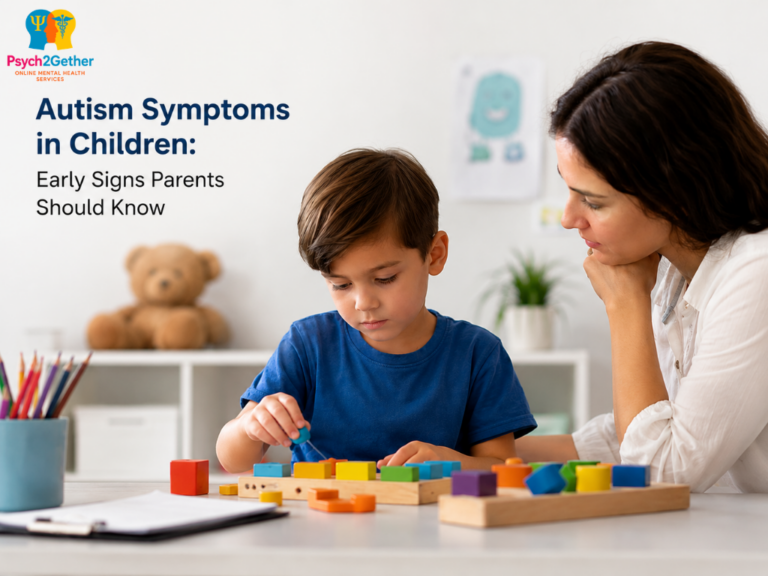
Every kid grows at their own pace. Some hit milestones right on cue, others take a longer, windier road to get there – and most of the time, that’s completely normal. But every so often, a parent clocks something that just feels off. Maybe it’s the eye contact that isn’t quite there, or the words that should’ve shown up by now and haven’t, or a reaction that seems way bigger than whatever set it off. That’s usually the moment the search for answers around autism symptoms in children starts.
You know your child better than anyone else on earth. If something’s been nagging at you for a while, it’s worth trusting that instinct enough to look into it properly.
Autism doesn’t look the same on any two kids, which is exactly what makes it hard to pin down. Even so, a handful of signs tend to crop up again and again in the early years:
Most of these tend to show up before a child turns three. If a few of them sound familiar, a child autism assessment is a much better next step than carrying the uncertainty around by yourself.
For most parents, communication is where the first flicker of concern shows up. Maybe your child doesn’t turn their head when you call their name. Maybe they never point at something exciting or grab your hand to drag you over and look at it. Pretend play – feeding a toy, stirring an imaginary pot of soup – might just not be something they gravitate toward.
There’s a social side to this as well. Some children genuinely just prefer being on their own, and that’s not the same thing as shyness – it’s more like a different wiring underneath. Picking up on facial expressions or a shift in someone’s tone can be a real struggle for them. Once nursery or school starts and they’re surrounded by other kids doing things differently, that gap tends to get a lot harder to ignore.
When speech delays and pulling away socially show up together, it’s worth digging deeper. A lot of families start with a child autism test before going any further.
Outside of language and social stuff, it also helps to notice how your child moves through a regular day:
There’s some crossover with ADHD here too, and that’s exactly why clinicians often look at both at the same time. If focus or attention seems tangled up in the picture as well, it’s worth reading up on child ADHD symptoms, since the two conditions frequently show up together.
If a feeling keeps tugging at you, don’t just wait it out and hope it sorts itself. Things like speech therapy, occupational therapy, or steadier routines at home tend to work far better when they start early, rather than after months of wondering.
Psych2Gether runs thorough evaluations built for exactly this kind of situation. Their online autism and ADHD assessments skip the long NHS wait, and their wider psychology services can pick things up from there once a diagnosis is in hand.
And if ADHD traits seem to be part of the picture as well, this piece on managing ADHD without medication has strategies that often apply here too.
Spotting autism symptoms in children early isn’t about slapping a label on your kid. It’s about understanding them a bit sooner, so the right kind of support can start a bit sooner too. Not sure where to start? Reach out through the contact page and have a quick conversation. It might be exactly what settles the questions that have been keeping you up at night.
To seek help or professional expertise connect with us at Psych2gether
To understand more, visit us at psych2gether, 79 College RdHarrow HA1 1BD, UK