Understanding psychotic depression symptoms
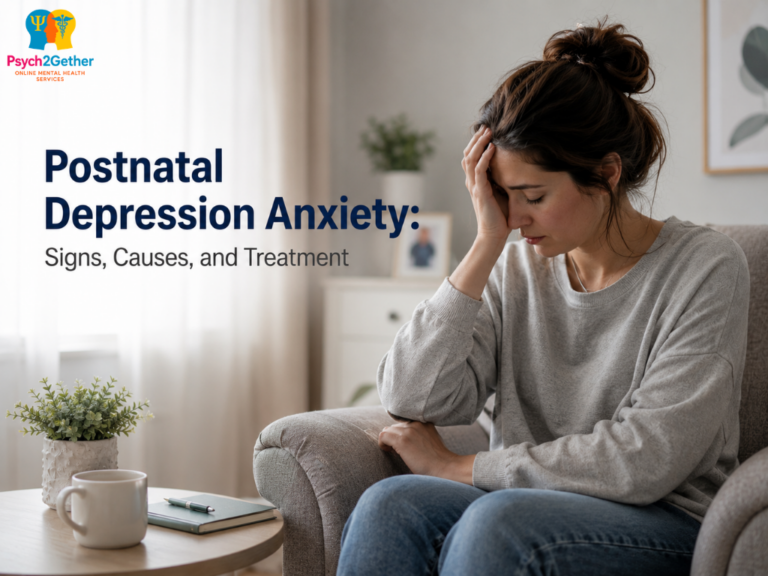
Nobody really prepares you for this bit. You spend nine months picturing tiny socks and nursery rhymes, and then the baby actually arrives – and somewhere in the fog of feeds and nappies, you start feeling… off. Not sad exactly. Not anxious exactly. Just off, in a way you can’t quite explain to anyone. That “off” feeling has a name: postnatal depression anxiety. And honestly, more mums go through it than you’d think – they just don’t always talk about it. If this is ringing a bell, please know you’re not failing at anything. Real help exists, and it works.
Everyone warns you about the first fortnight – the tears, the hormones, the general wreck you feel like. Fine. That part’s normal. But postnatal depression anxiety doesn’t politely leave after two weeks. It hangs around. It turns tiny things into huge things. You might hold your baby and feel nothing, or feel terrified, when you expected to feel warm and gooey inside. If that’s where you’re at, it’s genuinely worth looking into proper anxiety support rather than gritting your teeth and hoping it passes.
If a few of these have been hanging around longer than a week or two – that’s not “just tiredness.” That’s worth paying attention to.
There’s rarely one neat reason. Usually it’s a few things stacking up at once:
None of that is on you. Postnatal depression anxiety doesn’t care how prepared you were, or how much you love your baby. It just happens.
Guessing what’s wrong gets old fast – and scary, too. A proper psychiatric assessment gives you real clarity instead of another 2am spiral through search results. Curious what that even involves first? This diagnosis guide lays it out simply, no jargon.
There’s no magic fix, but most people find relief through some combination of:
So many mums say the relief wasn’t just the treatment – it was finally having a plan instead of white-knuckling every single day. Wondering how that first step even looks? Here’s what starting depression counselling tends to involve.
Now, honestly. You don’t need to hit rock bottom first. If everyday life with your baby feels heavier than it should, that’s already reason enough. An online consultation skips the long waitlists most people dread. And if cost is on your mind – fair, it usually is – take a look at the fees and payment options early, so it’s one less thing weighing on you.
Postnatal depression and anxiety are common, it’s real, and it does get better – genuinely. You don’t have to smile through it or wait for permission to ask for help. Whenever you’re ready, just book a consultation. That first step is the hard one. Everything after tends to feel a little lighter.
To seek help or professional expertise connect with us at Psych2gether
To understand more, visit us at psych2gether, 79 College RdHarrow HA1 1BD, UK