Understanding psychotic depression symptoms
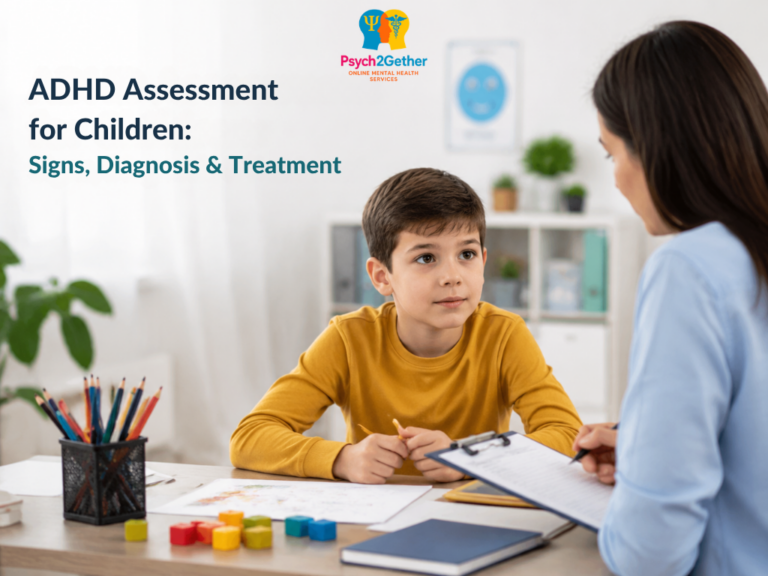
Recognising ADHD in children can feel overwhelming for parents. Many children struggle with focus, impulsivity or hyperactivity. But if these patterns seem to persist and start affecting school, friendship and daily life, they need your attention. It is important to understand these signs to know when to seek help. Also, learning what a children’s ADHD therapy involves can give your child the support they need to thrive.
This guide explains the common signs of ADHD in children, how the assessment process works and what treatment options are available including an ADHD symptoms in children checklist to help you decide on the next step.
ADHD, or Attention Deficit Hyperactivity Disorder, is a neurodevelopmental brain condition that affects the way children focus, control impulses and manage their energy. It is not caused by poor parenting or too much screen time. It is a real, brain-based condition that affects around one in twenty children in the UK.
Not every child with ADHD is the same. Some are predominantly inattentive whereas some are predominantly hyperactive and many show a mix of both. The main difference between typical childhood behaviour and ADHD is the persistence and impact of these traits.
The signs of ADHD usually appear before the age of twelve and are noticeable in more than one environment. Here is an ADHD symptoms in children checklist to help you identify patterns that may need attention:
Inattention
Hyperactivity and Impulsivity
If you see several of these signs in your child for a long time, it may be worth considering a professional evaluation. An ADHD assessment for children can give a clear picture of the condition and a pathway to the right support.
Many parents wonder if their child’s behaviour is just a phase or something more. It is natural for a child to be energetic, distracted or impulsive at times. But, you should consider an ADHD assessment for children if:
A thorough ADHD assessment for children is an organised, multi-step process carried out by specialist clinicians. At Psych2gether, the process is designed to be supportive and child-centred.
The assessment includes:
The process is collaborative. You are a vital part of your child’s assessment and your support help the clinician build a complete picture.
After an ADHD diagnosis, there are several evidence-based treatment options available. The right approach depends on your child’s age, symptoms and individual needs.
Structured behavioural intervention and parents training programmes are often the first line of support for your children. These help parents and teachers create consistent routines, clear expectations and positive reinforcement plans that reduce conflict and build confidence.
Older children and teenagers may benefit from cognitive behavioural therapy or other talking therapies made for ADHD. These can help them process their emotions, improve social skills and self-esteem.
In some cases medication is recommended. It is mainly when the symptoms are moderate to severe and significantly impact daily functioning. If medication is appropriate, your consultant will discuss the options and benefits in detail.
An ADHD diagnosis can open the door to additional support at school, such as extra time in exams or a quiet workspace. Your assessment report can be shared with your child’s school to help secure these adjustments.
If you have concerns about your child’s focus, behaviour or emotional wellbeing, a professional assessment can provide the answers you need. At Psych2Gether, children’s ADHD therapy and assessment services are delivered online by experienced consultant psychiatrists and clinical psychologists, making expert care accessible from your own home.
Book a Free 15-Min Consultation
A free consultation gives you the chance to discuss your concerns, ask questions and decide whether a full ADHD assessment for children is the right next step for your family. There is no obligation and you do not need a GP referral.
To seek help or professional expertise connect with us at Psych2gether
To understand more, visit us at psych2gether, 79 College RdHarrow HA1 1BD, UK