Understanding psychotic depression symptoms
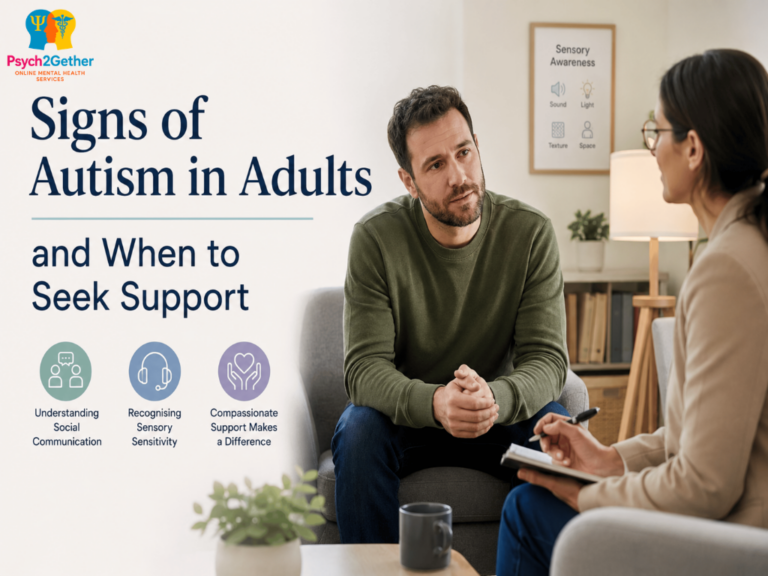
Autism in adults often goes unrecognised for years. Many people reach adulthood without a diagnosis. Masking their differences or having been mislabelled as shy, anxious or simply “different”. It is important to understand the signs of autism in adults to get the right support. If you have been wondering whether you or someone you know care about might be autistic, you should get an adult autism assessment for clarity and validation.
This guide explains the common signs of autism in adults, why a late diagnosis matters and what an adult autism assessment involves.
Autism is a neurodevelopmental condition that affects how a person communicates, interacts with others and experiences the world. Every autistic person is unique yet there are common patterns that may become more noticeable in adulthood.
Many autistic adults find social situations draining or confusing. You might:
These challenges do not mean lack of interest in others. Many autistic adults care deeply about relationships but find it difficult to interact.
Sensory sensitivities are common in autistic adults and can significantly affect daily life. You might:
These sensory differences are real and valid. They are not “overreactions” but a different way of processing the world.
Autistic adults often have intense, focused interests and a strong preference for predictability. Many autistic adults are highly skilled in their areas of interest and bring valuable strengths to their work and relationships.
A large number of autistic adults have spent years “masking” consciously or unconsciously hiding their autistic traits to fit in. But it can result in anxiety, depression and burnout.
If you experience long periods of exhaustion after socialising or chronic anxiety in everyday situations. An adult autism assessment can help you understand these experiences and access support that works on the root cause, not just symptoms.
There are many reasons why someone might seek an adult autism assessment later in life. Some people have always felt different but never knew the reason why. Others are prompted by a family member’s diagnosis, a change in life circumstances or mental health difficulties that do not fully respond to standard treatment.
An adult autism assessment is a structured and well planned process done by experienced clinicians. It is made to understand your unique profile.
An adult autism assessment involves a detailed clinical interview, a review of your developmental history and validated screening tools. The clinician will explore your social communication, sensory experiences, interests, routines and any challenges you have faced.
The process is collaborative. You are the expert on your own experience and the assessment is an opportunity to share that in a supportive setting. After the assessment, you will receive a detailed report about the findings and recommendations for next steps.
At Psych2Gether, adult autism assessments are conducted by consultant psychiatrists and clinical psychologists with specialist experience in neurodevelopmental conditions. The assessment is delivered online, so you can access expert care from home, at a time that suits you.
Consider seeking an adult autism assessment if you:
You do not need a GP referral to book an assessment. A free 15-minute consultation is available to discuss your concerns and help you decide whether a full adult autism assessment is the right next step.
If you are reading this because you are concerned about a partner, family member or friend, the most important thing you can provide is patience and acceptance. Do not pressure someone into seeking an assessment before they are ready. Share information, listen without judgement and let them lead the process.
If you are exploring this for yourself, trust your instincts. Many autistic adults say that the decision to seek an adult autism assessment was one of the most important steps they took toward understanding and accepting themselves.
Book a free 15-Min consultation at Psych2gether today.
To seek help or professional expertise connect with us at Psych2gether
To understand more, visit us at psych2gether, 79 College RdHarrow HA1 1BD, UK