
How Therapy for Children Helps
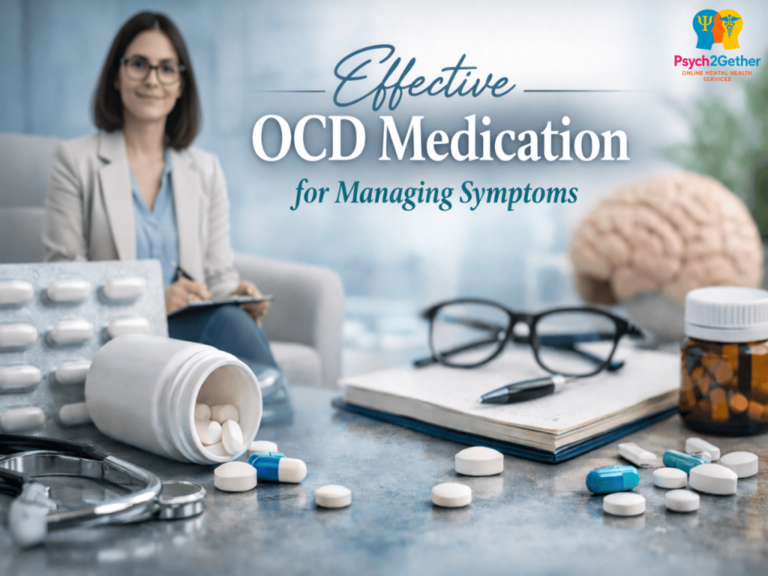
Obsessive-compulsive disorder (OCD), characterised by intrusions and repetitive behaviour (compulsions), affects trillions of people worldwide. It is a chronic mental health condition that can significantly interfere with daily life. Effective OCD medication for managing symptoms is as crucial as therapy to improve the quality of life. Let us guide you through the most effective medications for OCD, their pros and cons and what to expect during treatment.
Certain imbalances in the brain chemicals, especially serotonin, a neurotransmitter that is involved in mood and anxiety regulation, are often referred to as OCD. The medications for OCD focus on increasing serotonin, which reduces the obsessions and, thereby, compulsions.
Medicine helps in :
Selective serotonin reuptake Inhibitors (SSRIs) are most commonly prescribed OCD medications and are considered to be most effective also.
Clomipramine (Anafranil) is one of the earliest medications that has proven effective for OCD.
Doctors may use augmentation strategies for patients who do not respond to standard OCD medication. Common augmentation options are mostly reserved for severe OCD and should be closely monitored by a psychiatrist from renowned facilities like us Psych2gether
The answer varies from person to person.
The most effective treatment for OCD is the combination of medicine and therapy, especially Cognitive Behavioural Therapy. Studies reveal that combining medication and ERP therapy yields better outcomes than either treatment alone.
To conclude, we can say that finding the right medicine for OCD is often life-challenging. The process often takes time and patience; however, the modern treatments offer some real hope for long-term management or symptom relief.
You should always consult a qualified mental health professional at Psych2gether to get a better insight into personalised treatment options. To seek help or professional expertise with OCD.
To seek help or professional expertise with OCD Medication, you may also connect with us at Psych2gether
To understand more, visit us at psych2gether, 79 College RdHarrow HA1 1BD, UK