Bipolar Symptoms Test Online: Signs, Screening and Next Steps
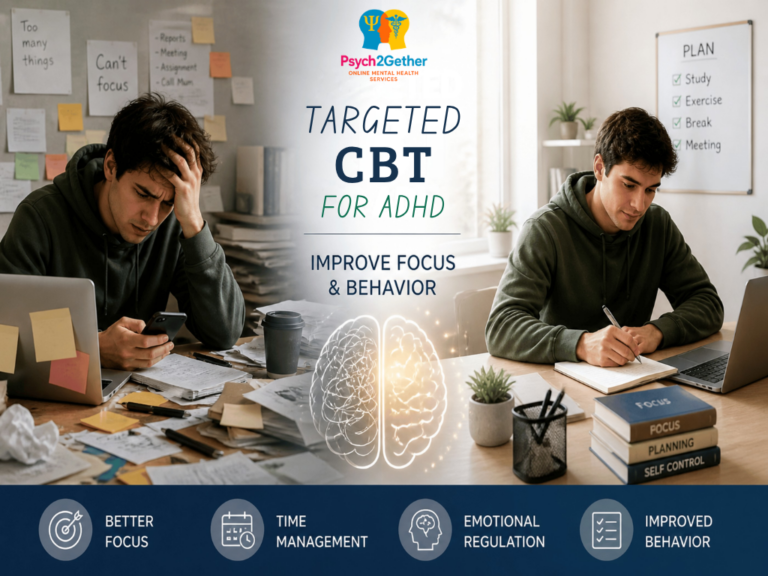
Attention Deficit Hyperactivity Disorder (ADHD) impacts millions of people of all ages, interferes with their ability to concentrate, control their emotions, and deal with their daily lives. Medication is a common element in treatment, but it is rarely effective by itself. Cognitive Behavioural Therapy (CBT for ADHD) is one of the most successful psychological interventions for tackling the behavioural or cognitive issues that medication cannot treat.
Through the cognitive restructuring of unhelpful thinking patterns and the development of strategies to manage these, CBT provides a focal and sustained approach to enhance functioning.
ADHD isn’t just about being easily distracted. It can also include impulsivity, mood regulation, time management, and an inability to complete tasks. Whether you are considering Adult ADHD or helping a child with Child ADHD, the symptoms are often very similar – although they manifest uniquely throughout development.
These issues can also be coupled with anxiety, depression, or other forms of mood disorders, so a proper evaluation is particularly important before deciding on a particular treatment approach. If you’re not sure whether you have ADHD, you can use a structured Adult ADHD Test to get some clinical information.
While conventional “talk” therapies tend to focus on emotional processing, CBT for ADHD is structured and skills-oriented. It helps people to recognise unhelpful thinking patterns, like “I always fail” or “I can’t do this”, and to reframe them in a more realistic, positive way. Simultaneously, it provides practical tools to support organisation, prioritisation, and self-control.
This therapy focuses on:
A comprehensive psychological assessment is an important first step before starting any treatment. At Psych2Gether, all clients undergo an evidence-based assessment with senior consultants who have expertise in neurodevelopmental disorders. This means that CBT can be delivered in the context of an appropriate diagnosis and treatment plan.
The psychology services pathway may also include components from other evidence-based approaches, depending on the person’s co-occurring concerns (e.g., anxiety, depression, or other conditions).
In children, CBT for ADHD may include parents. The support of parents is vital in generalising the skills and strategies learned in therapy, and the home itself becomes part of the treatment. Therapy helps to strengthen skills around behaviour, emotional awareness, and social skills – all essential for long-term success.
It’s also important to note that ADHD often co-exists with Autism Spectrum Disorder. If your child has both, you may be advised to have a double assessment. Read more about Child Autism testing and how it is different from, but also commonly co-occurs with, ADHD.
ADHD is often accompanied by reports of OCD, mood problems, or trauma. CBT for ADHD can be adapted to include treatment for these conditions, but may require input from other professionals. For instance, if there are obsessive-compulsive features, it may be best to use a combined approach using the guidelines for treatment of Obsessive-Compulsive Disorder (OCD).
Or if the person has faced adversities or trauma while growing up, it may require support in parallel with ADHD treatment, as these can increase ADHD symptoms and make it harder to respond to treatment.
Asking for help for ADHD is not a sign of weakness – it’s a sign of strength. Whether you’ve been newly diagnosed or living with the symptoms for many years, you can benefit from the right psychological support.
Ready to begin? Book a consultation today to begin your journey towards improved clarity, concentration, and behaviour change, with expert guidance.
Are you ready to start your journey? Contact Us Today!
To seek help or professional expertise connect with us at Psych2gether
To understand more, visit us at psych2gether, 79 College RdHarrow HA1 1BD, UK