
Find the Best psychologist near me
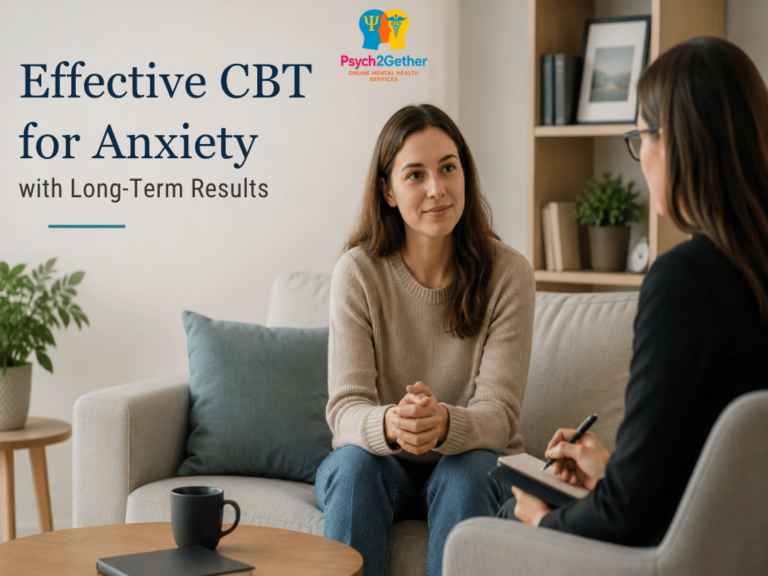
One of the most widespread mental health issues that is not well understood is anxiety. Constant worry, physical tension, and avoidance are issues that many people grapple with long before they seek help. The positive aspect is that CBT for anxiety is a well-known structured therapy with long-term relief. It makes you realize how negative thinking patterns build up anxiety and also teaches you some practical skills to question and substitute these habits.
CBT is fact-oriented and in the present. It operates under the concept that what you think determines how you feel and what you do. CBT for anxiety helps to decrease anxiety by detecting distorted thinking and substituting it with balanced thoughts. This is not a question of being positive by force; it is how to develop genuine and enduring skills that you can apply on your own. One of the good things to do first is to take an adult anxiety test in order to be aware of your present condition.
The initial step is to map your own anxiety triggers. A trained therapist assists you in maintaining a thought journal where you note the circumstances that cause you to become worried, the automatic thoughts that come to mind, and the physical sensations that follow. The step can be quite clarifying – most individuals are amazed to have their anxiety patterns laid out on the table.
The comprehensive initial step is usually initiated by a formal anxiety test, and this enables the clinicians to know precisely what is happening to you and the extent of the experience before prescribing a unique treatment journey.
CBT then presents methods of critical analysis of patterns after identifying them. Are you overestimating danger? Underrating your coping skills? Assuming the worst outcome is the only possibility? By means of Socratic questioning and organization, you start to loosen the hold of these distortions – and substitute them with correct and evidence-based thinking.
CBT for anxiety is also behavioural change-based. Avoidance gives temporary relief and permanent support to fear. Graduated exposure exercises are designed by therapists – situations that are carefully planned so that you can test your predictions in the real world, becoming more and more tolerant and confident. Every little victory reprograms your nervous system to react to things that you once were afraid of.
CBT is considered to be a long-lasting approach to anxiety, which is one of the strongest reasons to support CBT. Research consistently shows that skills learned in CBT continue working after therapy ends, sometimes for years. This differentiates it from medication only, which needs to be used continuously to benefit.
One of the reasons why this is so long-lasting is that CBT does not fix any problems; it just shows you how to fix them. The relapse prevention aspect of CBT specifically teaches you to identify early warning signs and use your ability before anxiety gets out of control.
The initial step towards therapy may be daunting – but it is the most necessary. CBT for anxiety is effective because it must be provided by trained professionals, both in the science of the method and to the individual in front of them.
Regardless of whether you have been feeling anxious for months or years, evidence-based therapy is a real path to permanent change, not merely to the suppression of symptoms, but to a completely new approach to your own mind.
Willing to make a step? Book a consultation to talk about your needs and get the right pathway to you – confidential, caring, and fitting your goals.
Are you ready to start your journey? Contact Us Today!
To seek help or professional expertise connect with us at Psych2gether
To understand more, visit us at psych2gether, 79 College RdHarrow HA1 1BD, UK