
Find the Best psychologist near me
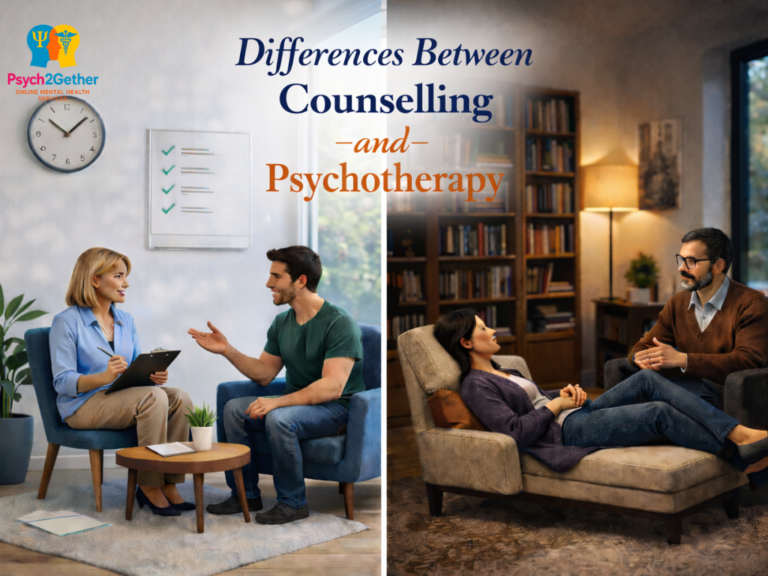
Mental health awareness has peaked in recent years, and now more people rely on seeking professional help to improve their mental health. Counselling and psychotherapy, terms often used interchangeably, are the two most commonly encountered terms. Both of these, though they aim at improving mental well-being, are very different in focus, depth, duration and approach. Understanding the differences between counselling and psychotherapy can help people make well-informed decisions about the kind of mental support they require.
This is generally short-term, which helps people in dealing with specific issues and life situations. It often revolves around the present-day issues and helps people cope with current-day challenges. Common issues addressed in counselling may include: stress, anxiety, low self-confidence, workplace challenges, academic pressure, relationship issues and adjustment to other life changes.
Counselling sessions are structured and goal-oriented. The counsellor works with the client in order to identify the main concern and set realistic, achievable goals. The focus is on the present rather than exploring past experiences.
Counselling is short-term and hence useful for people who want immediate support through a particular phase of life.
Psychotherapy goes beyond immediate issues and is a more in-depth and long-term process that aims at addressing complex emotional and psychological issues. It aims at understanding the underlying patterns that tend to influence thoughts, emotions and behaviours. This is commonly used for people experiencing long-term emotional trauma, depression, persistent anxiety, trauma-related difficulties or other challenges that affect day-to-day functioning.
Psychotherapy usually addresses deeper emotional issues, it takes place over a longer period, and it requires a strong therapeutic relationship between the client and the therapist. The psychotherapy process may feel more exploratory and less structured than counselling; hence allowing space for insight, self-awareness and emotional processing.
Although the Differences Between Counselling and Psychotherapy may seem subtle, they are significant. Here are some key points of difference:
Both terms also have many similarities. Some of them are:
Now that you know the differences between counselling and psychotherapy, Choosing between counselling vs psychotherapy depends on individual needs, preferences and goals. Our mental health professionals at psych2gether have the expertise to assess individual concerns and help you select the most suitable approach.
To understand more, visit us at psych2gether, 79 College RdHarrow HA1 1BD, UK