
Find the Best psychologist near me
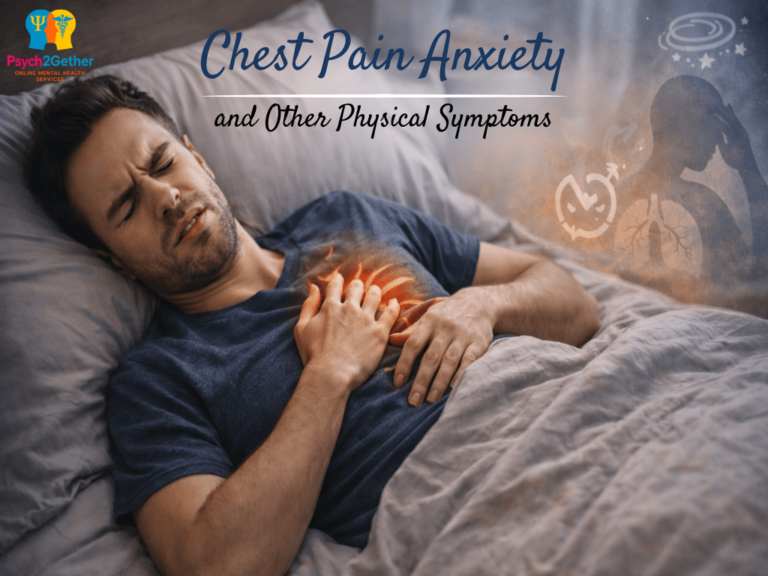
Chest pain is scary. It immediately triggers thoughts of heart attacks in many, but what is surprising is that anxiety can itself cause chest pain and other intense physical symptoms- even when nothing is medically “wrong” Anxiety doesn’t just live in your head; it shows in your body in different ways. Tightness in the chest, short breath, dizziness or unexplained body pain during periods of stress or panic are some of the commonly visible symptoms. In this blog, we will evaluate How you can get Chest Pain from Anxiety and Other Physical Symptoms of anxiety and how to tell the difference between anxiety-related pain and something more serious.
The answer is yes. The body tends to activate fight-or-flight mode when anxious. This is a survival mechanism designed to protect your body from danger, but when triggered by stress, worry or panic, it can lead to uncomfortable physical sensations. Chest pain from anxiety can feel sharp, tight, burning or heavy, which sometimes feels like a mini heart attack.
The autonomic nervous system, which controls involuntary functions like heart rate, breathing and digestion, is affected by anxiety. Chronic anxiety puts your body in “emergency mode”.
If the chest pain is severe or persistent, it’s very important to seek medical help. Our professionals at Psych2gether help you treat this chest-related pain, rule out the severity, and then understand anxiety’s role.
Anxiety management can reduce physical symptoms significantly.
Our professionals at Psych2gether help you rule out the serious causes and lay a clear path ahead.
You can get chest pain from anxiety and many other physical symptoms that feel intense, alarming and very real. Understanding the connection between anxiety and physical symptoms is very important to break the loop and head towards a normal life again.
To seek help or professional expertise connect with us at Psych2gether
To understand more, visit us at psych2gether, 79 College RdHarrow HA1 1BD, UK